
Capital Gains Tax Reform and Property Valuation: What Property Owners Considering a Sale in the Next Few Years Should Know Before 1 July 2027


What Property Owners Considering a Sale in the Next Few Years
Should Know Before 1 July 2027
If you may sell an investment property in the next few years, this is not something to leave until a buyer is in front of you.
From 1 July 2027, Australia’s capital gains tax rules are changing for affected assets held across that date. For some owners, that means the tax position attached to a future sale may depend partly on what the property was worth around the transition point. That matters because the real result is not the headline price. It is the net outcome after tax, timing, conditions, and costs.
For owners in SEQ growth areas, this sits inside a bigger picture. You may already be weighing timing, buyer demand, changing laws and regulations, holding costs, overlays, flood mapping, resumptions, and whether to sell now or later. Tax is part of that decision. Not a clean-up job after the fact.
SEQ Site Sales does not provide tax advice. We help landowners understand what may affect their position early, so they can get the right advice before the sale path is chosen under pressure.
If you may sell an affected investment property in the next few years and expect to hold it across 1 July 2027, an independent valuation near that date may become important evidence in supporting how pre- and post-transition growth is treated.
What is changing from 1 July 2027?
As of 24 August 2026, the Australian Government has confirmed the capital gains tax reform, and Treasury states that the first stage of legislation has passed Parliament and is law. Further legislation dealing with detailed matters, including how gains are divided between periods before and after 1 July 2027, was still in exposure-draft form following consultation that closed on 21 August 2026.
That means owners should pay attention now and keep an eye on updates as final legislation and ATO guidance are released.

From 1 July 2027, the existing 50% CGT discount will generally be replaced, for eligible post-transition gains, with:
CPI-based cost-base indexation
a minimum 30% tax rate on real capital gains
The reform generally applies to eligible CGT assets, including property, held for at least 12 months by:
individuals
partnerships
trusts
A point that needs to be kept plain: the 30% minimum tax is not 30% of the sale price.
It applies to relevant real capital gains after inflation adjustments under the new rules.
Why this matters more if a sale is on your horizon
If you are considering a sale in the next few years, you are in a different position to someone with no intention of moving for a decade. You are closer to a real decision.
You may be choosing between:
selling before the transition date
holding through it
testing the market first
waiting for a stronger buyer or better structure
trading a short settlement for certainty or a longer settlement for uplift
Once those choices are live, tax stops being background noise.
It becomes part of the commercial picture.
Why a 1 July 2027 valuation may matter if you expect to sell later
Property values do not move evenly. That is where this gets practical. If your property has already had strong growth before 1 July 2027, and you sell after that date, evidence of market value near the transition point may become important in showing what part of the gain belongs to the earlier period and what part belongs to the later one.
"A CGT transition valuation is an independent assessment of a property’s market value at or near 1 July 2027, kept as evidence to help support how value growth before and after the tax rule change may be treated.”
Why owners considering a sale should care now
If a sale may happen in the next few years, the timing window is narrow enough that preparation starts to matter.
Leave it too late and you can end up trying to solve an evidence problem after the event. That is usually the expensive version.
A retrospective valuation may still be possible later. The issue is not whether it can be done at all. The issue is whether it is as clean, as defensible, and as easy to support once time has passed and market evidence has aged.
The Australian Property Institute recommends that affected owners consider obtaining a comprehensive inspection valuation close to 1 July 2027 and retaining:
>>> the valuation report
>>> supporting evidence
>>> relevant records tied to the property and its condition
For owners who may be selling in the next few years, that is not over-preparation. It is sensible record keeping.
The mistake landowners make when a sale starts getting closer
A lot of owners still think in sale price first. That is too narrow. When a future sale is on the horizon, the better question is not just: "What could I sell for?"
It is this: "What do I actually keep after tax, timing, conditions, and costs?"
"That is the number that affects retirement plans, family wealth, debt reduction, the next property move, and how much flexibility you have after the deal is done."
Many owners assume:
tax can be sorted once a deal is agreed
valuation can wait until someone asks for it
the highest number on paper is the best outcome
That thinking misses how large and complex sales actually work.
For bigger landholdings and investment property, the best outcome is often shaped by a mix of:
price
terms
timing
buyer credibility
tax position
records prepared in advance
If you are even half-thinking about a sale in the next few years, this is the stage to get clear. Not the stage to drift.
Who should pay attention to this now?
This article is general education only, but this issue may be especially relevant if you:
own an investment property that may be affected by the reform
expect to hold that property across 1 July 2027
may sell in the next few years
have owned the property long enough that substantial growth may already have occurred
want to protect the net outcome, not just chase a headline number
are already reviewing broader sale timing issues like holding costs, tax, terms, or changing land constraints
This is not just for owners ready to list now
You do not need to be listing next month for this to matter. In fact, owners often get the most value from this kind of planning when they are still early enough to make clean decisions. That fits how we work.
SEQ Site Sales is built around expert advice on the side of the owners in advance of selling. The point is to understand what may affect value and net outcome before you are forced into a rushed call.
What SEQ Site Sales can do for owners considering a sale in the next few years
SEQ Site Sales is Focused on Protecting & Maximising Landowner Value. That means we look at a future sale the way landowners should look at it. Not as a listing event. As a commercial decision with moving parts.
We can help by:
raising tax-related sale issues early as part of a broader full risk analysis
helping owners think beyond headline price and focus on net outcome
identifying where valuation, legal, planning, environmental, or tax input should be brought in before the selling path is chosen
connecting owners with the right professional team when needed, including a valuer and property tax accountant from our extended network
helping owners weigh timing against other risks affecting value in SEQ growth areas
advising on likely buyer pathways, sale method, and price/terms if a sale may happen in the next few years
providing landowner representation even where the owner is not ready to go to market yet
What we do not do:
provide personal tax advice
calculate your tax liability
replace your accountant, registered tax adviser, or valuer
tell every owner to take the same path
We are there to help owners get clear on what matters, what should be checked early, and who should be around the table before the pressure is on.
The Net Outcome Check for owners thinking about selling in the next few years
If a sale may happen in the next few years, this is the filter worth using.

The Net Outcome Check
☐ What is the likely gross sale result?
☐ What are the terms doing to the deal?
☐ What taxes and costs may change what you keep?
☐ What should be prepared before you test the market?
☐ What changes if you sell now versus later?
If the net outcome is unclear, the sale path is not clear. That is a better starting point than chasing a price and hoping the rest behaves.
Checklist for owners who may sell in the next few years
This is a general preparation checklist only. Owners should speak with their accountant or registered tax adviser about their own position.
CGT and Sale-readiness Checklist
Confirm whether the property is an investment property and whether the reform may be relevant to your situation.
Speak with your accountant or registered tax adviser about whether holding the property across 1 July 2027 could affect a future sale.
Ask whether an independent valuation near 1 July 2027 should be arranged if you may sell after that date.
If advised, engage an independent valuer for a comprehensive inspection valuation close to the transition date.
Keep the full valuation report and supporting evidence in a safe and accessible file.
Retain records relevant to the property, its condition, and any details that support market value context.
Keep track of legislative updates and ATO guidance as the remaining detail is finalised.
Review the property as part of a wider sale-readiness picture, including overlays, adjusted flood mapping, resumptions, rates, land tax, and GST where relevant.
If a sale may happen in the next few years, get early advice on sale method, likely buyer pathways, and price/terms before the market tests you.
Consider an initial obligation free call and free in depth consultation if you want a broader view of what may affect your property value and net outcome.
Choose this if...
Choose early tax advice - if you expect to hold an investment property across the transition date and may sell after it.
Choose a valuation discussion now - if a large part of the property’s growth may already have happened.
Choose a broader landowner review - if tax is only one of several issues shaping your future sale decision.
Choose early sale planning - if you want to understand whether selling sooner, later, off market, or under different terms changes the real outcome.
Common mistakes to avoid if a sale may be coming
Waiting until the deal is already moving
Once offers or negotiations start, decisions speed up. That is a poor time to discover you should have sorted valuation, tax advice, or records earlier.
Treating tax as separate from sale planning
For owners considering a sale in the next few years, tax is part of the same commercial picture as timing, terms, and buyer quality.
Assuming a retrospective valuation will be just as easy later
It may still be possible. It may also be harder to support cleanly once comparable evidence becomes older and less available.
Looking only at the top-line number
The highest offer is not always the best deal. Not if the terms are weak. Not if the buyer is shaky. Not if the net result is worse once the dust settles.
Why this matters even more in SEQ growth areas
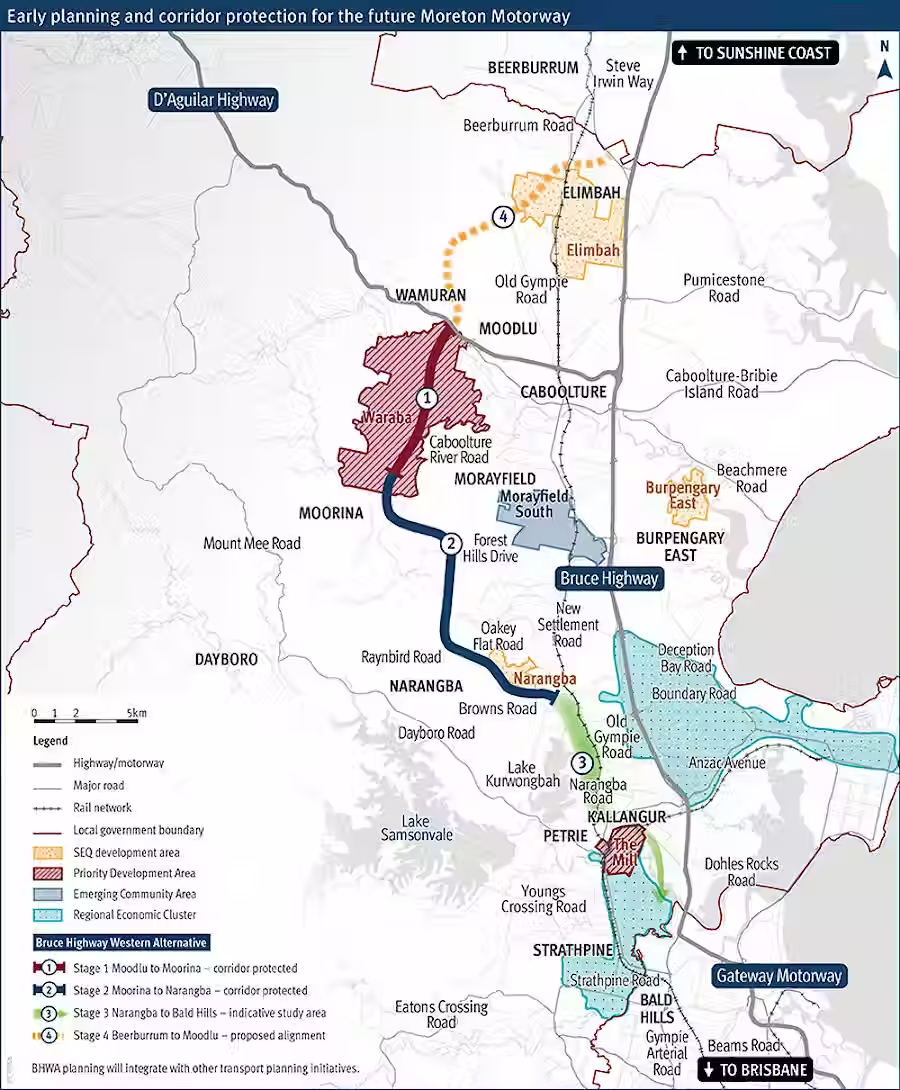
For SEQ landowners, capital gains tax is rarely the only moving part. A future sale can also be shaped by:
koala environmental overlay risk
adjusted flood mapping
reduction in usable land
resumptions for schools, major roads, parklands, and community facilities
rising rates
increasing land tax
transfer taxes such as capital gains and GST
That is why we take a wider view.
If you may sell in the next few years, the right first step is often not to rush into a campaign. It is to get clear on the risks, timing, sale options, and net outcome first.
That is landowner representation.
A future sale gets easier to handle when the land owner understands the
moving parts before the market starts setting the pace.
Key Takeaways:
If a sale may happen in the next few years, this issue is worth looking at now.
From 1 July 2027, CGT rules are changing for affected assets held across that date.
For some owners, a valuation near 1 July 2027 may become important evidence.
The real question is not just sale price. It is net outcome.
Early preparation gives owners more control before the pressure of a live deal.
SEQ Site Sales helps landowners look at the wider picture before choosing a sale path.
If you own a larger property in the SEQ growth areas and may be considering a sale in the next few years, start with an initial obligation free call.
We can help you look at the broader picture through landowner representation, including tax-related sale considerations, likely buyer pathways, timing, price/terms, and the risks that may affect your net outcome.

Frequently Asked Questions
If I may sell in the next few years, should I care about the 1 July 2027 CGT change now?
Yes, if you expect to hold an affected investment property across that date. For some owners, a valuation near 1 July 2027 may become useful evidence in supporting how future capital growth is treated. It is easier to think about this early than in the middle of a sale.
Does every owner considering a sale need a valuation at 1 July 2027?
No. That depends on the property, the ownership structure, and whether the reform applies to that owner’s situation. The right step is to speak with an accountant or registered tax adviser first.
Is the 30% minimum tax 30% of the sale price?
No. Based on the source material provided, the 30% minimum tax applies to relevant real capital gains after inflation adjustments under the new rules. It is not 30% of the property sale price.
What if I do not plan to sell until after 1 July 2027?
That is exactly why this may matter. If you will hold the property across the transition date and sell later, records created near the transition point may be more useful than trying to reconstruct them years after the fact.
Does SEQ Site Sales provide tax advice on CGT?
No. SEQ Site Sales does not provide personal tax advice. We help landowners understand where tax may affect the net
outcome and where specialist advice should be brought in early.
Why is this relevant for SEQ landowners specifically?
Because tax is usually only one part of the decision. In SEQ growth areas, owners may also be dealing with overlays, flood mapping, resumptions, rates, land tax, and sale structure choices that all affect the real outcome.


Comments