
The new risk stack for SEQ landowners ... and why holding isn’t “set and forget” anymore

The “new risk stack” for SEQ landowners is the growing set of constraints and costs that can quietly change what your property is worth: environmental overlays (including koala environmental overlay), adjusted flood mapping, resumption risk for infrastructure, and increasing rates, land tax and transfer taxes.
Holding land can still be a strong long-term play, but it isn’t “set and forget” anymore. You need to know your risks early.
If you’ve been holding for 20 years, this is the reset
A lot of SEQ landowners have done very well from capital growth over the past two decades. That part is real. The trap is assuming it’s the default setting.
In SEQ growth areas and urban growth corridors, owning a large property now comes with more moving parts than it used to. Not because the land stopped being valuable. Because the rules around it keep shifting, and the holding costs keep climbing.
If you’re thinking, “We’ll deal with all that when we’re ready to sell,” you’re not alone. It’s also how landowners get blindsided.
This article gives you a blunt breakdown of what’s changed, what it can do to usable land and value, and what we look at in a full risk analysis.
What we mean by “risk stack”
Risk stack is our shorthand for the layers that can affect your land’s future use, your landowner rights, and your net outcome.
It’s rarely one thing. It’s the combination that hurts.
A simple example:
A mapping change reduces usable land.
That changes what a buyer can do.
That changes what they’ll pay.
Then holding costs keep rising while you “wait for the next cycle.”
Same property. Different outcome.

The 5-part SEQ risk stack (what’s changed)
The ever-changing landscape of laws & regulations
Large-property owners are operating in an environment where rules can shift over time. The practical issue is not the rule itself. It’s timing.
If a change lands before you have clarity on your options, you’re forced into reacting. We’re focused on Protecting & Maximising Landowner Value. That starts with knowing what could affect your position before you’re under pressure.
Environmental overlays (including koala environmental overlay)
If your property has trees, you’re exposed to the risk of increased environmental overlay.
What landowners often miss is how overlays can change the conversation from “potential” to “constraints.”
This is where value gets lost quietly. Not with a dramatic letter. With a gradual reduction in what can be done with the land.
What to watch:
Whether your property is already affected by an overlay
Whether nearby areas are seeing overlay changes
Whether the overlay reduces usable land or changes what approvals look like
Adjusted flood mapping and the reduction in usable land
Adjusted flood mapping is a big one because it can directly limit future use.
The part that matters commercially is the reduction in usable land.
A buyer might still want the site, but their feasibility changes. Their timeline changes. Their risk changes.
And they price that in.
Practical reality:
Two landowners can own the same number of hectares on paper.
The one with more usable land is often worth more.
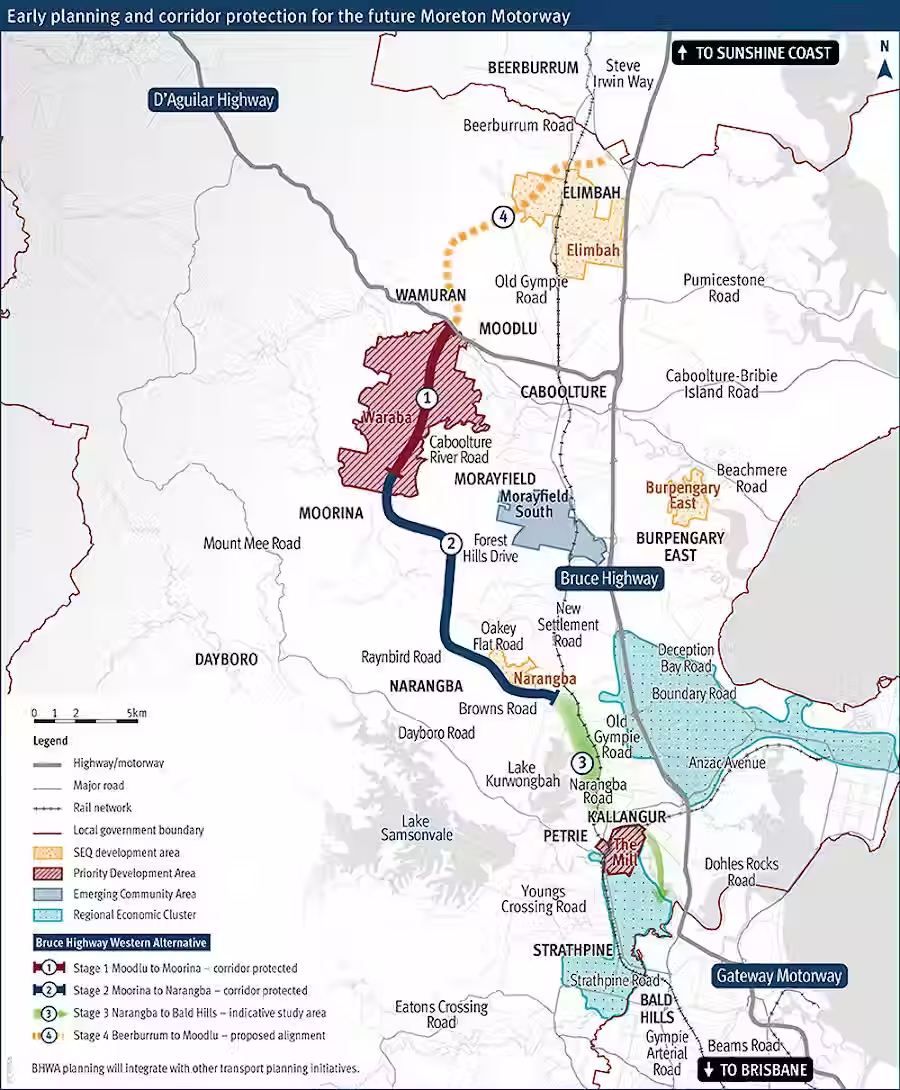
Resumptions in priority growth areas
In priority growth areas there is the ever-increasing risk of resumptions for future schools, major roads, future parklands, and community facilities.
Resumptions aren’t just a planning concept. They can change your bargaining position.
What to watch:
Infrastructure planning signals in your broader area
Whether your holding sits in a corridor where land is being earmarked for community facilities
Tax pressure and rising holding costs (rates, land tax, transfer taxes)
Holding costs have become a real line item for many owners.
The stack here includes:
Rates going up
More properties being categorised for increasing land tax
New taxes and increasing existing ones
When selling, transfer taxes such as capital gains and GST that can materially change the final net outcome
This is where “headline price” can distract you.
A good result isn’t just price. Terms, timing, conditions, and tax consequences matter.
The belief shift: holding isn’t neutral anymore
A lot of owners still treat waiting as the safe option. It isn’t.
Waiting can be the right call, but it’s not neutral. While you hold, your property can pick up constraints, costs, or both.
That’s why we push the same first step, even for owners who aren’t ready to sell:
Know your risks ahead of time:
Not when a buyer is in front of you.
Not when a mapping change has already landed.
Not when you’re suddenly trying to make a once-in-a-lifetime decision in a 14-day window.
 | A simple decision aid: are you “set and forget” or “watch and act”?Use this as a quick self-check.You can usually relax a bit if:☐ You’re not in an active SEQ growth area / urban growth corridor ☐ Your usable land is unlikely to be materially affected by overlays or mapping changes ☐ Holding costs are manageable and not changing your lifestyle decisions ☐ You’re not in a zone where resumptions are a realistic near-term risk You should be in “watch and act” mode if:☐ You’ve heard credible talk of overlays, flood mapping changes, or resumptions in your broader area ☐ You’re seeing rising rates or land tax pressure and it’s starting to bite ☐ You’ve had offers before and you suspect the fine print was doing the damage ☐ Your plan is “we’ll work it out when we sell”. If you ticked 2+ you don’t need panic - You need clarity. |
What a full risk analysis looks at (without turning you into a planner or lawyer)
Landowners don’t need more noise. They need a clean view of what matters.
In a free in-depth consultation, we look at the risk factors that can affect your property value and landowner rights, including:
overlay exposure (including koala environmental overlay)
adjusted flood mapping and what it means for usable land
resumption risk signals in priority growth areas
holding cost pressure (rates, land tax)
sale-stage tax considerations that can affect net outcome (capital gains, GST and more)
If specialist input is required, we can bring in the right people from our extended network (property solicitor, town planner, environmental consultant, resumption lawyer, valuer, property tax accountant).
That’s landowner representation. Not a generic listing conversation.
Common mistakes we see (that cost landowners leverage)
Waiting for “the perfect time” without checking what changed | The market moves. So do laws, overlays and mapping. If you haven’t reviewed your risk position in years, you’re negotiating blind. |
Only focusing on price | Price matters. But terms, timing, conditions, and whether the contract completes matter just as much. We’ve seen too many landowners burn time on deals that drift, extend, or fall over. |
Treating large land like a standard residential sale | Big land is different. It’s more complex, more conditional, and more exposed to planning and infrastructure decisions. It needs a professional team and a tightly structured process. |
If you’re not ready to sell, here’s the smarter move | You don’t have to list. You don’t have to “do something” immediately. You do need to know where you stand. |
Natural next step:
An initial obligation free call followed by a free in-depth consultation where we complete a full risk analysis on your property.
If you’re closer to a decision window, we can also discuss how to test the market at no cost by going directly to the most likely buyer, based on your selling criteria.
The new risk stack for SEQ landowners is the growing mix of constraints and costs
that can change property value over time: shifting laws and regulations, environmental overlays (including koala environmental overlay), adjusted flood mapping that reduces usable land, resumption risk for infrastructure, and rising rates, land tax and transfer taxes.
Holding isn’t “set and forget” anymore.
If you own a large property in SEQ growth areas and you’re not ready to sell yet,
start with clarity.
Book an initial obligation free call and we’ll organise a free in-depth consultation
to complete a full risk analysis on your property so that you know
what could affect future value before it costs you.

Frequently Asked Questions
What is the biggest risk for SEQ landowners right now?
It’s rarely one single issue. The biggest risk is the combined effect of overlays, adjusted flood mapping, resumption risk and rising holding costs. Any one layer might be manageable. When they stack up, they can reduce usable land, change buyer appetite, and cut into your net outcome.
Does a koala environmental overlay reduce my land value?
It can. If an overlay reduces usable land or limits future use, buyers will often price that constraint into their offer. The impact depends on how the overlay affects what can realistically be done with the site. The earlier you understand the exposure, the more options you keep.
How does adjusted flood mapping affect selling?
Adjusted flood mapping can change what parts of a property are usable and what approvals look like. That affects feasibility for buyers, which affects price and terms. Even if a buyer still wants the site, they may seek conditions, longer timeframes, or price reductions to cover the added risk.
What are resumptions and why do they matter?
Resumptions are when land is acquired for public purposes like schools, major roads, parklands or community facilities. In priority growth areas, this risk can increase over time. The commercial issue is uncertainty. It can change your leverage in negotiations and affect how buyers structure offers.
We’re not ready to sell. Is there any point talking to someone now?
Yes. The point isn’t to be pushed into a sale. The point is clarity. A free in depth consultation and full risk analysis can help you understand what could affect your land value and rights, and what steps you can take now to protect future value while you keep holding.
Is off-market always worse than a public campaign?
No. Off-market transactions can be the right path when the property is complex, privacy matters, or you want controlled buyer engagement. The method should match the site reality and your selling criteria. A good outcome comes from the right structure, not the loudest marketing.
What should I focus on: price or terms?
Both. A strong price with weak terms can still produce a poor result if the deal drifts, extends, or falls over. For large & complex sales, terms like conditions, timeframes, deposits and settlement structure can be the difference between a clean completion and months of uncertainty.


Comments